Summary
The Smart Functions of Sprinkler Irrigation Systems: Making Irrigation More Convenient and Efficient
With the acceleration of agricultural modernization, sprinkler irrigation systems, as essential irrigation equipment, are continuously advancing in intelligence. By integrating advanced control systems and sensor technology, intelligent sprinkler systems have automated, precise, and smart irrigation processes, bringing revolutionary changes to agricultural production.
Content
The Smart Functions of Sprinkler Irrigation Systems: Making Irrigation More Convenient and Efficient
With the acceleration of agricultural modernization, sprinkler irrigation systems, as essential irrigation equipment, are continuously advancing in intelligence. By integrating advanced control systems and sensor technology, intelligent sprinkler systems have automated, precise, and smart irrigation processes, bringing revolutionary changes to agricultural production.
I. Intelligent Control System: The "Brain" of Irrigation
The core of an intelligent sprinkler system is its smart control system, which acts as the equipment's "brain," commanding the entire irrigation process. Utilizing GPS positioning technology, the smart control system can precisely locate the sprinkler's position and automatically plan its route according to preset irrigation schedules. Users only need to set irrigation parameters on a control panel or mobile app, and the system automatically completes the irrigation task without manual intervention. For example, Valley's intelligent irrigation system in the USA achieves centimeter-level accuracy in automatic navigation via satellite positioning, greatly improving irrigation efficiency.
II. Precision Irrigation: A Tool for Water Saving and Efficiency Gains
Intelligent sprinkler systems are equipped with monitoring devices such as soil moisture sensors and weather stations, enabling real-time monitoring of environmental parameters like soil moisture, temperature, and rainfall. Based on this data, the system automatically adjusts irrigation volume and timing, achieving precision irrigation. This not only conserves water resources but also prevents soil compaction and nutrient loss caused by over-irrigation. Netafim's intelligent irrigation system in Israel, for instance, saves 30%-50% of water usage through precise irrigation control while increasing crop yields.
III. Remote Monitoring: Control Irrigation Anytime, Anywhere
Through IoT technology, intelligent sprinkler systems enable remote monitoring. Users can view real-time equipment operating status, irrigation progress, environmental parameters, and more via mobile apps or computer terminals, as well as remotely control equipment start/stop and adjust irrigation parameters. This allows farmers to stay informed about irrigation conditions and address anomalies promptly, even when away from the fields. Bauer's intelligent irrigation system in Germany supports global remote monitoring, enabling users to manage irrigation operations anytime, anywhere.
IV. Fault Diagnosis: Ensuring Stable Equipment Operation
Intelligent sprinkler systems are equipped with fault diagnosis systems that monitor equipment operating status in real time, promptly detecting and alerting users to potential issues. The system notifies users via audible/visual alarms or mobile push notifications, providing fault causes and solutions to facilitate quick problem resolution and minimize downtime. Lindsay's intelligent irrigation system in the USA can automatically diagnose common mechanical and electrical faults, offering detailed troubleshooting guides.
V. Data Analysis: Optimizing Irrigation Decisions
Intelligent sprinkler systems record and store extensive irrigation data, including irrigation volume, timing, and environmental parameters. By analyzing this data, users can evaluate irrigation effectiveness, optimize irrigation strategies, and improve water resource utilization efficiency. Advanced intelligent irrigation systems even incorporate AI algorithms, leveraging historical data and weather forecasts to predict future irrigation needs and provide users with smart irrigation recommendations.
VI. Automatic Obstacle Avoidance: Ensuring Safe Operation
Intelligent sprinkler systems are equipped with obstacle avoidance devices such as ultrasonic sensors or LiDAR, which automatically detect obstacles ahead and adjust the route or halt operations to prevent collisions. This significantly enhances equipment safety and reduces losses caused by collisions. Irrifrance's intelligent irrigation system in France employs advanced LiDAR technology, achieving 360-degree obstacle avoidance to ensure safe operation in various complex terrains.
VII. Automatic Retrieval: Saving Labor Costs
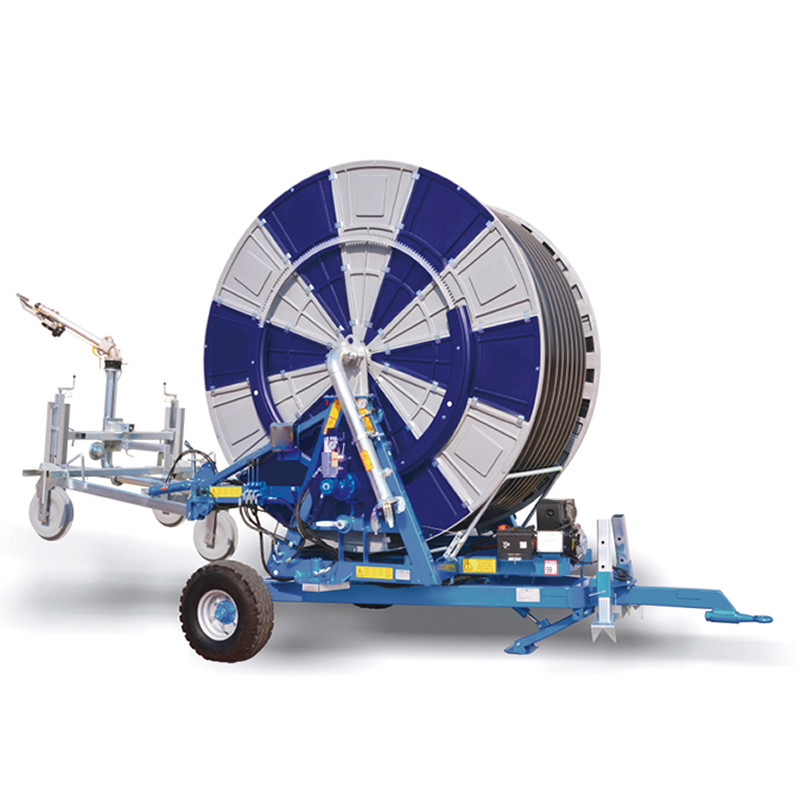
Some intelligent sprinkler systems also feature automatic retrieval functions. Once irrigation tasks are completed, the system automatically retracts the irrigation pipes without manual intervention. This greatly reduces labor costs and improves work efficiency. Idrofoglia's intelligent irrigation system in Italy utilizes a unique automatic retrieval technology, capable of retracting hundreds of meters of pipes within minutes, dramatically enhancing operational efficiency.
These intelligent functions of smart sprinkler systems not only simplify operational processes and improve irrigation efficiency but also enable water conservation and precise utilization. As technology continues to advance, intelligent sprinkler systems will become even smarter and more automated, bringing greater convenience and benefits to agricultural production. In the future, smart sprinkler systems will integrate with advanced technologies such as drones and robotics, enabling even more intelligent precision agriculture and promoting the sustainable development of agricultural production.